How do you split three days from Cádiz?
Sleep two nights in Cádiz and split the three days like this: day 1, the city on foot; day 2, Vejer and the Trafalgar coast by car; day 3, Ronda, also by car. If you have a fourth day, there is Doñana.
Book Torre Tavira beforehand; for the Gran Teatro Falla, ask for a prior visit, and for the free access to the Oratorio de San Felipe Neri, a place.
- Days
- 3
- Nights
- 2
- Base
- Cádiz
- Car
- Needed on days 2 and 3
Activities in Cádiz, Vejer and Ronda
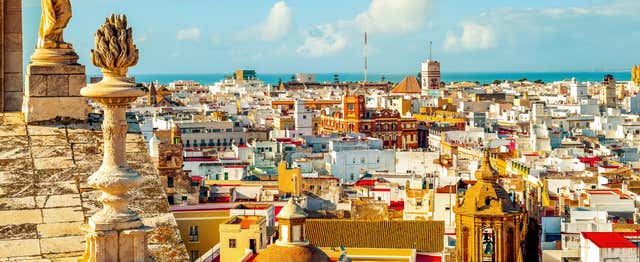
Free Walking Tour of Cadiz
Free tour: tip whatever you like
See on Civitatis (opens in a new tab)
Free Walking Tour of Ronda
Free tour: tip whatever you like
See on Civitatis (opens in a new tab)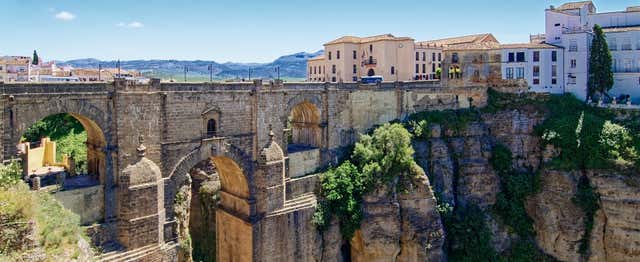
Ronda & Setenil Day Trip
from €22.99
See on Civitatis (opens in a new tab)Affiliate link: we may earn a commission if you book, at no extra cost to you. You book directly with the provider.
Three days and two nights in Cádiz
| Day | Where | What you do | Night |
|---|---|---|---|
| 1 | Cádiz | Cathedral and Torre del Reloj, Roman Theatre, Gadir archaeological site, Mercado Central, Torre Tavira and La Caleta | Cádiz |
| 2 | Vejer and the Trafalgar coast | Vejer old town, El Palmar and Trafalgar lighthouse | Cádiz |
| 3 | Ronda | Puente Nuevo, Alameda del Tajo and Arab Baths | |
| 4 (optional) | Doñana | Off-road route from El Acebuche |
What to book beforehand
- Torre Tavira. It works by appointment with limited capacity: book your time slot on its website, especially at weekends and in summer. The visit lasts about 45 minutes and ends at the camera obscura.
- Oratorio de San Felipe Neri. General admission is paid. For the free access hours on weekdays you have to request a place through Cádiz Sacra.
- Gran Teatro Falla. Visits are by prior request.
- Doñana (optional day 4). The southern 4x4 route is booked on 959 430 432 or at donanavisitas.es, and places are limited.
For the rest of what you see, no official listing asks for a booking: the Roman Theatre is free and the Mercado Central has free entry. Opening hours change: confirm them on the official website before you go.
What to do each day
Cádiz on foot
Start with the cathedral and the Torre del Reloj, a viewpoint over the city and the Atlantic with its own hours. On Sundays the cathedral opens at 13:30 and the Torre del Reloj at 12:00: that day, start somewhere else. Then the Roman Theatre, from the 1st century BC, which is visited from the Theatrum Balbi Interpretation Centre, and the Gadir archaeological site, which opens in sessions on the hour. According to the municipal listing, it opens Saturday to Wednesday and on Thursdays until 14:00, and is listed as closed on Fridays: adjust your walk to arrive for a session. Finish the morning at the Mercado Central, with fish, seafood and fruit stalls.
In the afternoon, Torre Tavira with your appointment already booked: the camera obscura works with daylight and from May to September it is open until 20:00, with last entry one hour before closing. Then La Caleta, an urban beach of about 500 m between two castles, and the Castillo de Santa Catalina, with free entry (11:00 to 19:00 from October to March and until 19:30 from April to September). Only Torre Tavira has an official visit time, 45 minutes; for the rest, leave some margin. If you have got a place for the free access, fit in the Oratorio de San Felipe Neri, home of the 1812 Cortes.
Where to sleep (nights 1 and 2). In Cádiz, in one of three areas: the old town (Pópulo and Santa María), to walk to the cathedral, the towers and the market; La Viña and La Caleta, near the beach and the Castillo de Santa Catalina; or Playa Victoria, for a sandy beach with a seafront promenade, further from the old town. The old town and the seafront promenade (as far as Calle Caracola) are a low-emission zone, with restrictions based on the environmental label: check the council's ordinance and whether fines are already being applied before you drive in. There are public car parks open 24 hours.
Where to stay in Cádiz
Once you have chosen your base, check availability, cancellation terms and prices for your dates on Booking.com. What you see there depends on the dates you search.
See places to stay in Cádiz on Booking.com (opens in a new tab)Affiliate link: we may earn a commission if you book, at no extra cost to you. You book directly with the provider.
Vejer and the Trafalgar coast
Go to Vejer by car: it is 59 km from Cádiz, about 50 minutes. Spend the morning in the old town, which you walk around on foot: the walls and the Arco de la Segur, the Plaza de España, the Judería and the Mirador de la Cobijada. The castle may be closed: check first with Vejer's Culture Department (956 450 800). Park in Los Remedios or on Calle Corredera and walk up, because inside the walls the streets are narrow and steep.
In the afternoon, head down to the coast. El Palmar beach is between 9 and 12 km from the old town, according to Vejer Tourism. Then the Trafalgar lighthouse and Caños de Meca, about 17 km from Vejer, where the lighthouse road ends at the Trafalgar tombolo, a double tombolo that joins the islet to the coast and is a Natural Monument. Check the wind before choosing a beach: the levante is the prevailing wind in the area. Go back to Cádiz to sleep.
If you want to go into the Torre del Tajo, in La Breña y Marismas del Barbate Natural Park, contact the park's information point (956 45 97 80) first: it is not open permanently. The trail starts at a parking area at km 19.5 of the A-2233, heading towards Los Caños.
Ronda
Ronda does not require bookings in this plan: you do not need to book to enter the monuments, although the bullring sells tickets online and at the ticket office. Start with the Puente Nuevo and its view of the Tajo. Continue along the Alameda del Tajo, the gardens of the Casa del Rey Moro (you visit the mine and the historic garden, because the house is being restored) and the Arab Baths, which have a capacity of 25 people outdoors and 10 in the audiovisual room and do not admit animals, except assistance dogs.
The town council's tourist pass includes the Puente Nuevo Interpretation Centre, the Casa del Gigante, the Arab Baths and the Palacio de Mondragón; the Casa del Rey Moro is not included. The Plaza de Toros de la Real Maestranza remains open with consolidation works under way: confirm which areas can be seen. For Mondragón, the council website does not publish hours or a price outside the pass: ask at the tourist office. There are no official visit times for these places, and you have to measure the journey from Cádiz yourself: leave early and adjust the order as you go.
Where to sleep. You do not need a night in Ronda: the plan is two nights, and day 3 ends with the return to Cádiz or home. If you prefer to stay, Ronda has accommodation in the old town, around the Puente Nuevo and in the San Miguel district; that adds a night.
Where to stay in Ronda
Once you have chosen your base, check availability, cancellation terms and prices for your dates on Booking.com. What you see there depends on the dates you search.
See places to stay in Ronda on Booking.com (opens in a new tab)Affiliate link: we may earn a commission if you book, at no extra cost to you. You book directly with the provider.
Doñana (optional day)
The southern Acebuche-La Plancha route covers about 70 km in an off-road vehicle with a guide-driver and lasts about 4 hours. It is booked on 959 430 432 or at donanavisitas.es. There is a morning and an afternoon departure, with one rest day a week.
Cuesta Maneli, the wooden walkway next to the Asperillo cliff (about 1.3 km, 30 minutes), does not require a permit, but it has been closed temporarily at times: confirm at El Acebuche that it is open. You get to Mazagón by car; measure the journey from Cádiz on your navigation app. Treat it as a full day and consider sleeping there.
How to get to Cádiz
Renfe runs trains to Cádiz from Madrid and from Seville, and the station is on Plaza de Sevilla. By car, it is 121 km (1 h 25 min) from Seville, 236 km (2 h 50 min) from Málaga and 651 km (7 h 10 min) from Madrid, according to OSRM. For days 2 and 3 you need a car.
More ideas in Cádiz, Vejer and Ronda
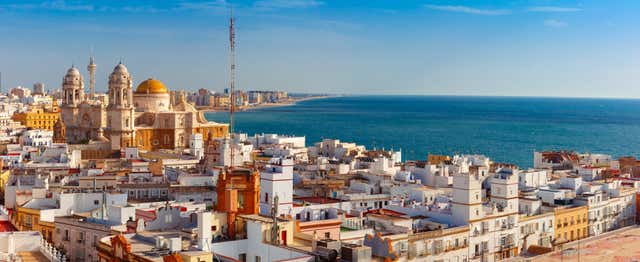
Walking Tour of Cádiz
from €13.50
See on Civitatis (opens in a new tab)
Vejer & Conil de la Frontera Small Group Day Trip
from €59
See on Civitatis (opens in a new tab)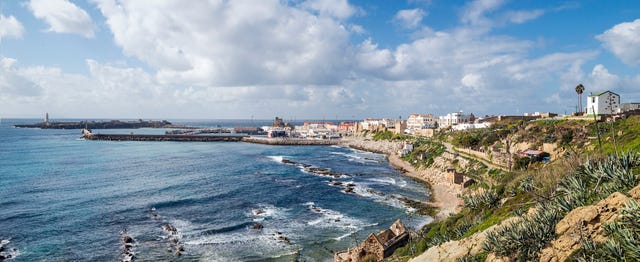
Tarifa, Vejer, & Baelo Claudia Day Trip
from €65
See on Civitatis (opens in a new tab)Affiliate link: we may earn a commission if you book, at no extra cost to you. You book directly with the provider.
The places on this route, one by one
Each guide covers what to see, when to go and how to get there.
Activities in each destination
Each link goes to the Civitatis catalogue for that destination, with activities sorted by reviews.
Affiliate link: we may earn a commission if you book, at no extra cost to you. You book directly with the provider.
Information, with context.
. Opening hours, bookings and conditions follow the official sources consulted in October 2026. They change often: confirm them on the official website before you go.